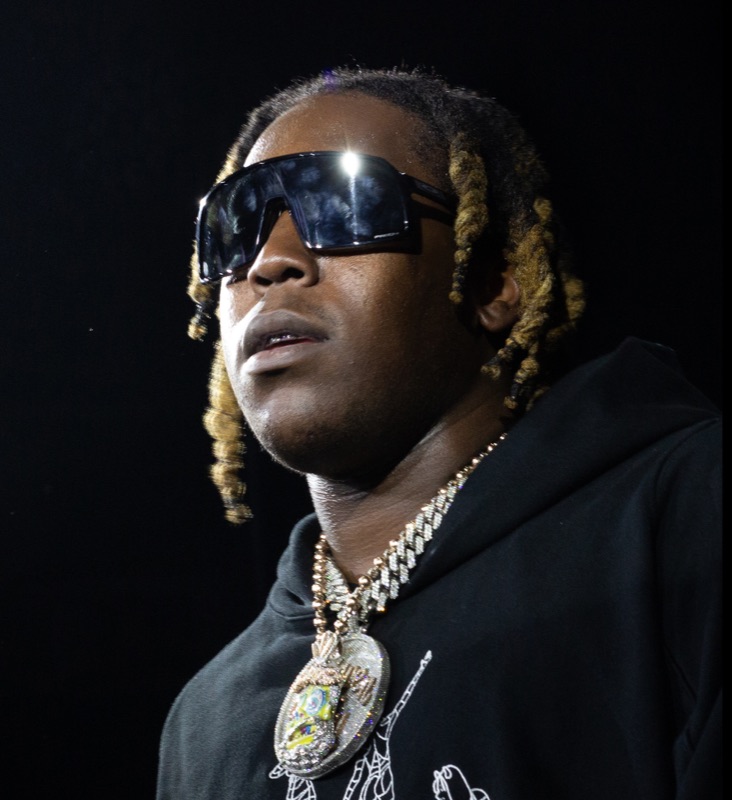
Most artists pick their influences. Don Toliver's were waiting for him in the living room.
To understand the woozy, half-time, reverb-drenched textures that define Don Toliver's discography from *Donny Womack* (2018) through *Octane* (2026), you do not start with Don. You start with a turntable in a Houston apartment in the early 1990s, a custom-made Akai pitch-shifter, and a 19-year-old DJ named Robert Earl Davis Jr. — better known as DJ Screw. This is the lineage that produced Don Toliver's sound, traced through four generations of Houston rap.
Generation One — DJ Screw (1971–2000)
DJ Screw, born July 20, 1971, in Smithville, Texas, moved to Houston as a child and grew up in the South Park neighborhood. By the early 1990s — working out of his apartment — he had pioneered a technique called "chopped and screwed." The mechanics: take an existing rap song, slow the tempo to roughly 60-70% of its original speed, and "chop" the beat by manipulating the turntables to skip and stutter selected phrases. The result was a hazy, narcotized version of mainstream rap that felt like the song was melting in real time.
Screw's mixtapes — sold initially out of his apartment, then through his Screwed Up Records & Tapes shop — became Houston's underground currency. His core circle of rappers, the Screwed Up Click (S.U.C.), included Big Moe, Z-Ro, Lil Keke, Fat Pat, Lil Flip, and Big Hawk. Screw himself died in 2000 of a codeine overdose, but the aesthetic he created — tempo as emotional language — became the foundation of Houston rap for the next quarter-century.
The atmospheric vocabulary Screw codified — slowed pitch, vocal warble, low-end bloat, a sense of underwater suspension — is exactly the vocabulary you hear in Don Toliver's music. Track "No Idea" (2019) at 84 BPM. Track "Cardigan" at 75 BPM. Track "Deep in the Water" (2024) at 76 BPM. Half-time, half-submerged. The Screw inheritance is not stylistic — it is structural.
Generation Two — UGK and the Texas Pimp Aesthetic (1992–)
Parallel to Screw's South Park experiments, UGK (Underground Kingz) — the duo of Pimp C (Chad Butler) and Bun B (Bernard Freeman) — were operating out of Port Arthur, Texas, two hours east of Houston. UGK formed in 1987, signed to Jive in 1992, and through albums like *Too Hard to Swallow* (1992), *Ridin' Dirty* (1996), and the Jay-Z-featuring "Big Pimpin'" (2000), they codified what would become the Texas pimp-rap aesthetic: country-rap-tunes drawl, slow funk basslines, syrup imagery, candy-paint cars, and a register of Southern masculine swagger that Andre 3000 once called "the blueprint."
UGK's contribution to the Don Toliver bloodline is less direct than DJ Screw's but still material. Don's recurring imagery — Houston cars (the "donk," "swangas"), candy paint, a slowed conception of cool — is UGK aesthetics filtered through two further generations. The track "Swangin' on Westheimer" on *Life of a Don* (Houston's Westheimer Road, the donk-customization tradition) is a direct UGK-lineage tribute.
Generation Three — Swishahouse (1998–)
The Screw aesthetic was an underground subculture through the 1990s. The label that turned it into a mainstream commercial product was Swishahouse, founded in 1998 by DJ Michael "5000" Watts and OG Ron C. Where Screw's mixtapes circulated on physical cassettes and CD-Rs, Swishahouse productized the chopped-and-screwed treatment for radio: cleaner production, faster turnaround, and — critically — a roster of original rappers who recorded specifically for the label rather than appearing on retroactive Screw remixes.
The Swishahouse roster's mid-2000s breakthrough — Mike Jones (*Who Is Mike Jones?*, 2005), Paul Wall (*The Peoples Champ*, 2005), Slim Thug (*Already Platinum*, 2005), Chamillionaire ("Ridin'," 2005) — produced the "Houston moment" that briefly made Houston rap the dominant regional sound on Billboard. By summer 2006, four Swishahouse-affiliated singles had charted top-20 on the Hot 100.
This is where Don Toliver's bloodline becomes literal.
Generation Three-Point-Five — Don's Father
Don Toliver's father is a singer/rapper affiliated with Swishahouse.
The fact has been corroborated across multiple sources covering Don's biography. The specifics — name, exact role, recorded credits — are not publicly documented, and those details are flagged for further verification. But the categorical fact stands: Don Toliver grew up in a household where Swishahouse music was not "an influence" in the sense that critics talk about influence. It was the family business. His father's Swishahouse records — and, by extension, the DJ Screw aesthetic those records descended from — were the soundscape of Don's childhood.
This is the argument for the bloodline thesis. Don is not a rapper who studied Houston rap. Don is a rapper who absorbed Houston rap by household osmosis. The Alief neighborhood Don grew up in — southwest Houston, the same neighborhood that produced Tobe Nwigwe and Tay-K — is geographically distinct from South Park (DJ Screw's neighborhood) and from the historical centers of Houston rap. But the music traveled. By the late 1990s and early 2000s, when Don was a child, Swishahouse was Houston-wide.
Generation Four — Don Toliver (2017–)
By the time Don dropped his major-label-debut mixtape *Donny Womack* on August 2, 2018, the Screw lineage was fully internalized.
The clearest evidence is sonic. The half-time tempos. The reverb-drenched vocal stacks (Screw's "underwater" feel translated to modern mix engineering by Mike Dean, the Houston-bred Geto Boys engineer who would mix every track on *Heaven or Hell*). The pitched-down ad-libs. The codeine imagery (handled, post the post-overdose era, more atmospherically than literally).
But the literal evidence is also explicit. *Heaven or Hell* (2020) was reissued on April 17, 2020 — five weeks after the original — as *Heaven or Hell (Chopnotslop Remix)*: a chopped-and-screwed version of the entire album. Six years later, on April 3, 2026, Don released *Choptane* — a chopped-and-screwed companion EP to *Octane*, produced with DJ Candlestick, mirroring the *Chopnotslop* gesture from 2020. Two studio albums, two chopped-and-screwed companion releases. Don is one of the only contemporary rappers whose discography includes a deliberate, recurring tribute to the Screw tradition as part of the canonical body of work.
The track "Get Throwed" on *Life of a Don* (2021) — produced by Mustard with Omar Grand, sequenced as track 10 — is named for the Screw-era Houston phrase ("getting throwed" = highly intoxicated on lean) and operates as a thematic homage. "Swangin' on Westheimer" on the same album is a Houston car-culture tribute.
What Comes Next
The Mike Dean-produced "Sweet Home" closer of *Octane* — interpolating Kid Rock's "All Summer Long" while Mike Dean (the Geto Boys / Rap-A-Lot engineer-turned-Kanye-architect) handles co-production — collapses the entire Houston bloodline into a single closing track. Mike Dean is the connective tissue: from Geto Boys (1989) to UGK to Travis Scott to Don. *Choptane* (April 2026) extends the Screw tradition forward into Don's *Octane* era. The bloodline is not nostalgic. It is alive. Whatever Don makes next, the Screw inheritance is built into the architecture — because for Don, it was never an influence. It was the room he grew up in.